The Apothecary & Correspondences
Correspondences of Virgo
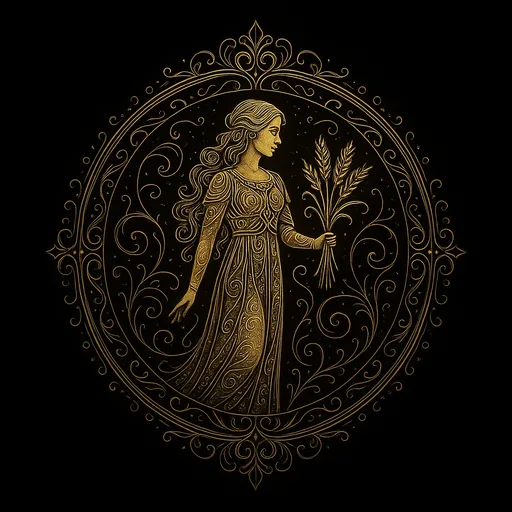 Correspondences of Virgo
Carnelian · Quicksilver · Wheat and moss · Cypress and patchouli
The stone, metal, color, and incense the old traditions set against Virgo.
Mercury's quicksilver returns for Virgo in tones of wheat and moss, the colors of the harvest field, with carnelian for warm motivation and cypress and patchouli to ground a busy mind in the earth. The old lore mirrors the careful, useful spirit — and reminds it that good is allowed to be enough.
The Virgo Palette
The correspondences of Virgo form a quiet, earthen harmony: carnelian for the stone, quicksilver for the metal, wheat and moss for the colors, cypress and patchouli for the scents. These are not the glittering or the loud. Carnelian, that warm rust-to-honey chalcedony, has been prized since antiquity for its gentle but steady radiance. Quicksilver—mercury in its fluid form—links Virgo to the planet Mercury and to communication, nimbleness of mind, and the flow of thought. Wheat and moss speak not of spectacle but of utility: the grain that feeds, the moss that softens stone. Cypress, that tall sentinel tree of Mediterranean gardens, and patchouli, earthy and grounding, complete a palette rooted firmly in the soil and in purpose.
The Character of Care
These correspondences reflect what the old traditions saw in Virgo: a sign of discernment, service, and right order. Mercury, Virgo's ruling planet, was the god of commerce, craft, and careful speech—not of grandeur, but of getting things done well. The colors of harvest and woodland moss suggest not decoration but work; carnelian has long been worn by those who labor with their hands or minds, believed to warm the will and steady the nerve. Together, they compose a signature of attention to detail, of finding meaning in what is useful rather than rare, of integrity in small things. This is the correspondence of the gardener, the healer, the scribe—those who see that excellence lies often in the ordinary.
Lore and Lineage
Carnelian appears in the oldest lapidaries, valued by Egyptians and Romans alike as a stone of vitality without aggression. Medieval herbalists assigned quicksilver to Mercury's day (Wednesday) and to Virgo's rulership, seeing in its liquid, changeable nature a mirror of mental agility. The cypress has graced sacred spaces—temples, tombs, and monasteries—for millennia, its vertical form seeming to reach toward heaven while its roots grip the earth. Patchouli arrived in Europe through trade routes, prized not as luxury but as a practical anchoring scent, used to ground and focus. These are correspondences born from real use, from centuries of observation, not from whim.
A Mirror for Reflection
When you encounter these Virgo correspondences, consider what they ask of you: Am I allowing myself to find satisfaction in work well done, even when unseen? Can I tend to the small details without losing sight of their purpose? Where in my life might I ground a restless or scattered mind—through the steadiness of a stone, the centering of an earthy scent, the reminder that the harvest itself was once merely careful tending? These symbols do not promise reward or perfection. Rather, they reflect back the question: What if competence, care, and usefulness were enough?
Want to know what Correspondences of Virgo means in your chart? The Eye reads it through your own birth sky.
Open your reading →