The Chinese Zodiac
Tiger
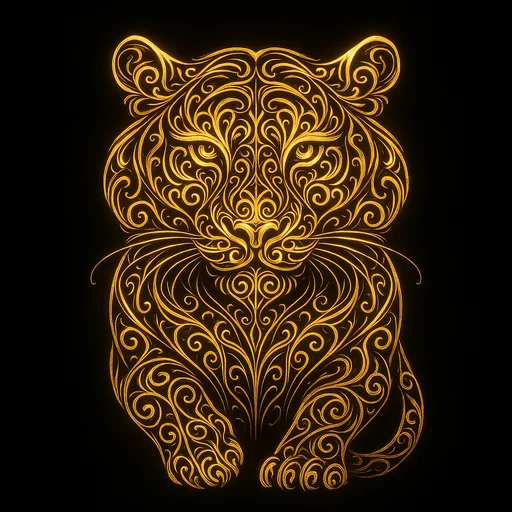 Tiger
Chinese zodiac · 3rd sign · Yang Wood
The third sign of the Chinese zodiac, the courageous and commanding one.
The Tiger is bold and magnetic: courage, presence, and a natural pull toward leading. It moves on conviction and inspires others to follow; its growth is to pair that daring with patience.
The Third Guardian
The Tiger is the third animal of the Chinese zodiac, a twelve-year cycle that emerged in Chinese culture by at least the 5th century CE, possibly earlier. It belongs to the Yang principle—active, expansive, masculine in the cosmic sense—and is paired with the Wood element in its traditional correspondence, granting it growth, flexibility, and reach. The Tiger year recurs every twelve years: most recently 2022, and before that 2010, 1998, and so on backward through dynasties and centuries.
In the Chinese cosmology, the Tiger is a creature of power and natural authority. Unlike the Ox before it or the Rabbit after, the Tiger does not toil or hide; it moves across terrain with presence and intention. It is associated with the direction east (the rising sun), the season of spring, and the hour of dawn, all of which speak to new beginnings seized with force rather than patience.
Courage and Command
To be born in a Tiger year, according to Chinese tradition, is to inherit a temperament marked by courage, independence, and magnetism. The Tiger is neither calculating nor timid. It acts on conviction and possesses an instinctive nobility that draws others toward it—not through cunning, but through sheer presence and confidence.
Yet this sign carries an interior tension: the Tiger's greatest strength—its daring, its refusal to wait—can also be its pitfall. History and legend show the Tiger thriving when its boldness is tempered by wisdom, discipline, or patience. The untamed Tiger may charge without foresight; the mature Tiger learns to harness its power with discernment. This is why the tradition pairs the Tiger with Wood: not a rigid element, but one that bends, grows toward light, and endures through seasons of change.
In Legend and Time
The Tiger appears throughout Chinese poetry, painting, and philosophy as a symbol of protection and military prowess. It guards thresholds in temple art; generals have invoked its spirit; poets have written of its solitary majesty in mountains and forests. Unlike the Dragon (magical and imperial), the Tiger is earthly and wild—supreme in its own realm, answerable to no one.
In the wider Asian context, the Tiger carries similar weight: fearless, noble, a lord of its domain. It represents not dominion over others, but mastery of one's own nature and territory.
For Reflection
If the Tiger speaks to you—whether you were born in its year or feel its presence in a question—consider: Where do you lead or stand out? Are you courageous in the face of uncertainty, or do you hold back? The invitation here is not to become bolder, but to ask whether your boldness is rooted in genuine conviction or merely in the wish to command. The Tiger at its wisest knows when to advance and when to rest, when to roar and when to listen. What would it mean to move through your life with both the Tiger's confidence and the patience to let things ripen in their time?
Want to know what Tiger means in your chart? The Eye reads it through your own birth sky.
Open your reading →