The Major Arcana
The Devil
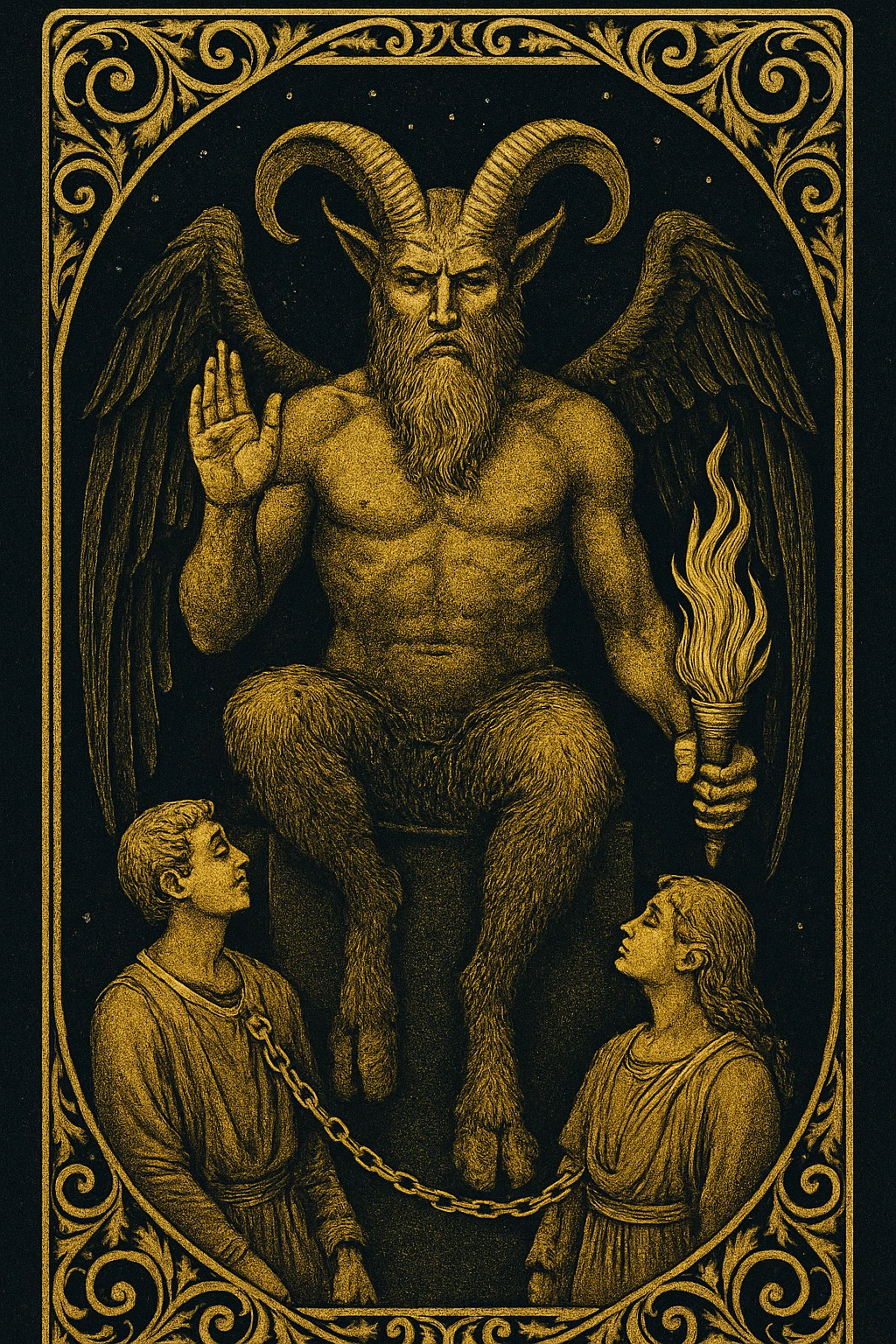 The Devil
Major Arcana 15 · shadow · attachment · temptation
The 15th card of the Major Arcana — shadow, attachment, temptation.
The chains you can choose to drop. The Devil is appetite, attachment, and the patterns that bind you — naming what has a hold on you is the first step to freedom from it.
The Card and Its Image
The Devil occupies the fifteenth position in the Major Arcana, a number long associated with bondage and transgression in Western numerology. In the Rider-Waite deck, the card depicts a goat-headed figure enthroned above two chained figures—often shown as a man and woman, sometimes winged. The chains around their necks are notably loose, a detail of profound importance: nothing holds them but habit and the belief that escape is impossible. The Devil himself wears an inverted pentagram on his brow, reversing the sacred geometry of the star. This card emerged from medieval tarot decks as "il Diavolo" in Italian decks, representing not cosmic evil but rather earthly appetite, bondage, and the shadow self that dwells within all of us.
The Deeper Significance
The Devil does not appear in tarot to condemn, but to illuminate. It speaks to the nature of attachment—how we become bound not by external force alone, but by our own desires, habits, and refusal to acknowledge them. Where the Tower breaks things apart suddenly, the Devil shows how we collaborate in our own confinement through small, repeated choices. It is the card of compulsion over choice, of the appetite that grows when fed and starves when named. Yet it is also honest: it does not pretend these drives do not exist or shame us for having them. It simply holds up a mirror to what we have normalized, what we have stopped questioning.
The Devil speaks to anyone caught in cycles they know are not serving them—addiction, codependency, self-sabotage, or the grip of perfectionism. It acknowledges the seductive pull of what harms us, the comfort in familiar pain.
The Shadow in History
Medieval and Renaissance theology understood the Devil not as chaos, but as the lord of the material world—earthly desire, flesh, temptation. This maps directly onto the card's lineage. Tarot itself was born in fifteenth-century Italy as a game and moral teaching tool; the Major Arcana functioned almost as a pilgrimage through virtue and vice. The Devil card sat opposite the Lovers in this moral landscape: one card about union and choice, the other about compulsion and illusion.
Across cultures, the horned figure—whether satyr, Pan, or demon—has represented not evil but rather the wild, sexual, appetitive self that civilization asks us to tame. The Renaissance saw these figures painted with curiosity rather than pure horror, recognizing in them a necessary truth about human nature.
As a Mirror
When the Devil appears in reflection, it asks: What have I agreed to without truly agreeing? What pattern repeats because I have stopped questioning it? The card invites you not to judge the appetite, but to see it clearly—to notice where you have become so accustomed to a cage that the door seems locked from the outside.
The real work of the Devil is recognition. Naming the chain is the first act of freedom. What feels inevitable in your life? What would you reclaim if you truly believed the chains could fall away?
Want to know what The Devil means in your chart? The Eye reads it through your own birth sky.
Open your reading →